Now I will try and keep what I write short, because I know not many people read my chapter reviews specifically because they're so lengthy. I begin with a story on my own experience as a child with reading.
Tuesday, April 14, 2015

Tuesday, April 7, 2015
Poetry and the Lesson Plan Prep
Thank you, WarnerJordanEducation, for the call back to poetry and the poetry lesson!
Sunday, April 5, 2015
Subjects Matter: Chapter 11 [What Teachers Make]
What are teachers if they don't teach?
Students are not all created equal, but as teachers we are tasked with providing a series of resources, strategies, and motivation to allow them to get to that point in their academic careers where they can say "I can do this." And, in my opinion, the situation that should happen in order to coach the students toward this self-awareness and independence must begin with us under the single notion and assumption that "we must build the practice before it can be put to good use."
Students are not all created equal, but as teachers we are tasked with providing a series of resources, strategies, and motivation to allow them to get to that point in their academic careers where they can say "I can do this." And, in my opinion, the situation that should happen in order to coach the students toward this self-awareness and independence must begin with us under the single notion and assumption that "we must build the practice before it can be put to good use."
Tuesday, March 31, 2015
Subjects Matter Chapter 9 & 10 (The "Well, duh!" Chapters)

I’m not sure about you but when I think about putting
practice to good use in my classroom I think about supplementing my students
with real-life representations of my subject area (ELA) as a part of their
materials. By doing this it would help our students better understand and
utilize our lessons in their daily and academic lives, right?
Tuesday, March 24, 2015
Subjects Matter Chapter 8 (and aforementioned of Chapter 5)
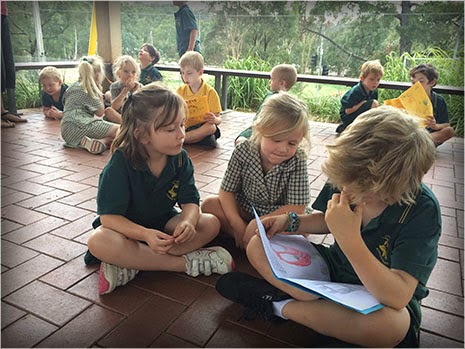
In the ELA curriculum it is very important that we give our
students time and space to independently explore their texts. Through this
activity the students must work through their reading—often time they are also
encouraged to research outside their text—and come to a deeper than usual
understanding of their materials before working it into in-class discusses. All
the same, the student and teacher must be able to read through the lines and
develop their own skills in which to utilize and retain information from their
texts and other materials. The teacher, as the oldest student in the room, is responsible for teaching and passing on the
knowledge in grasping important and relevant key concepts to their younger students and learners. (Often we refer
to this as “Learning how to take notes.”) From that, our students are then responsible
for honing in on their preferred methods and must fine tune their knowledge
base, reading skills, and note taking skills on their own. Gradually.
Independently.
Tuesday, March 17, 2015
Subjects Matter Chapter 6 and 7
When textbooks do not provide enough we as the educator are
not allowed to simply write them off and utilize that as the excuse to our
inadequate lessons or materials. As the most advanced student in the classroom,
it is our duty to educate the younger students in the methods, techniques, and
concepts of our discipline. After all, it is that liberty which catapults us
into the performance and role of the educator.

Tuesday, March 3, 2015
Context + RAFT = STYLE
CRAFT, otherwise defined as Context, Role, Audience, text Format, and Topic.
These are the Ten Design Principles
These are the Ten Design Principles
- Create topics that invite inventive thinking
- Select topics that have a purpose
- Make sure your topics are meaningful within your students' experience
- Design topics to elicit specific, immediate responses from your students, not vague abstract ones
- If you use a hypothetical situation, make sure it's within your students' grasp
- Use specific terms (such as define, illustrate, persuade, compare, contrast, analyze, evaluate, or invent) as precises indicators of your thinking and writing expectations
- Use creative formats for at least some of your assignments (Such as a letter to the mayor expressing concerns with the city's parks, or a report on nutrition written by a martian)
- Think of CRAFT when designing your assignments
- Whenever possible, give students a choice of writing assignments
- Define the criteria you'll use to evaluate student writing
Monday, February 23, 2015
Subjects Matter Chapters 3 & 4: Are textbooks worth it?
What are textbooks good for? Well, with a simply yet provocative
word: nothing.
The general argument I found Daniels and Zemelman to make in
Chapters 3 and 4 of Subjects Matter
felt to me that they love, love, love
avoiding textbooks. For the most part, the textbook syndrome involves a few key
conditions:
Wednesday, February 18, 2015
Our High School Curriculum
My colleagues and I were given the activity to design a high school curriculum. Our class was split into content subject and into groups of four. Each of our professional readings and studies in the field were pooled together to create the below. For what we included we did so based on our own experience as students but also as their major importance (both in our personal lives and what we believe students will need in order to be prepared for college/the work force). What we left out we decided would either only be necessary for those who continued into higher education and/or was not necessary for those who would have been disinterested in continuing our area of studies in higher education.
9th Grade

Monday, February 16, 2015
UbD + Module's A&F = Just a complex way of saying "Indirect Teaching Method" ?
Professional performance require very specific personal
management: everything is scripted, everything is rehearsed, everything is
intentional, and everything is purposeful. Of course that doesn’t mean that the
professional (in our case Educators) do not have the ability to be spontaneous and
adaptive to progressive accidents. But even in the unforeseen events—a student
completely misreading instructions or a student understanding and moving ahead
too quickly—we should be able to recourse our performance to align with the
situation at hand. At its core this is what UbD aims to get across to us.
Wednesday, February 11, 2015
Subjects Matter Critique on Chapters 1 & 2
What we as teachers see in our
students are peerless embodiment's of knowledge. How we convey that knowledge
oftentimes involves us lecturing them, but what we all want at the end of the
day is for the students themselves to attain whatever knowledge they need
through their own means. Thusly, it is
only conclusive and through consideration that we, as educators, push and pull
our students to learn what to read, how to read it¸ and why they are reading what they read.
Wednesday, January 28, 2015
Wilhelm Chapter 1 & 2
The
Wilhelm chapters can be summed in a short, simple, and to-the-point sentence “This
is how to teach.” But the actual work to
getting to the point of “This is how to teach” is far from short, simple, or
to-the-point. Countless times, Wilhelm
makes reference that teaching is a step-by-step learning that educators must
first immerse themselves in.
Literary Profile
Commute
in the city had always been bogged down by heavy traffic, lack of blinker
users, and the inability of most people (driver and pedestrians alike) to
follow signal patterns. It came as no
surprise that accidents occurred.
Pedestrians ran the risk of being clustered together on slow moving
sidewalks, and times they even risked the chance of being hit by approaching
vehicles. Drivers were no exception to
this; they were usually piled upon each other in traffic jams, and in rare
occasions they were a part of accidents and collisions. When I was a child I would go along with my
mother to the Providence market place as she shopped. I was the miniature shopping cart that
carried everything while she went from shop to shop, from stall to stall, gathering
foods and merchandise for the week. That
day she had decided to visit a market in Cranston. I remember it well because of our drive back
home. Forever embedded in my mind is the
scene of the man clad in yellow who hopped across car rooftops and landed
beside ours window.
Friday, December 12, 2014
Promising Practices 2014 with Keynote Speaker Dr. Christopher Emdin
Promising Practices has been a conference I’ve attended
annually, ever since I first entered Rhode Island College in 2010. What I have learned as varied immensely, but
what I always end up taking away is “Choose your workshop carefully.”
Observation #4 The 12th Grade ELA and Theater Class
Name: __________
Date: __________
Class: __________
Sect.: __________
Shakespeare and
Persona
Short Essay (Pick 2)
Observation #3 What is Classroom Management like?
When I first met Mr. Kinslow, I felt intimated by his
balance of authority, professionalism, public display of personality, and
overall likeableness. Before entering
his 11th grade English Language classroom I had heard of his
teachings from other educators as well as Central Fall’s High School students.
“Mr. Kinslow understands the kids.” “You’re working with Mr.
K? He’s real.” “Make sure to pay attention not only to how he teaches, but also
to how his students treat the class.”
Wednesday, December 10, 2014
Microteaching II - Indirect Methods
Alright, this is the space where I would like my fellow student-teacher candidates to comment on my Microteaching II lesson. As all of you know, both of our camera's decided to die half way through my lesson. And for the folks that were able to stay through the night as I went downstairs into the lobby to charge them, we decided to continue recording Nathan's lesson because his schedule was strained.
Here, I would appreciate there being two sets of commentary.
The first can be about my attempt at Microteaching in the SU room. Although the lesson wasn't finished, we nearly reached all the areas that I wanted to cover without reaching the Main Idea segment. Please do critique how my performance was in this lesson.
And once I have finished editing my recording, I would like my group members to watch this video and comment in the same way as well. I first and foremost apologize for the lack of communication (with Final Exams taking place and everyone rushing to finish their own Microteaching II lessons), but I would much appreciate the 5 to 10 minutes it will take you to help me improve my lessons for the future!
Observation #2 - The Lesson Plan
In this observation assignment, your goal is to
reverse-engineer a lesson plan. Watch the class, and write the lesson plan that
teacher is using.
Do this by OBSERVATION, even if the teacher is willing to
share their lesson plan with you. This is about improving your observation
skills, not getting ‘the answer’.
Observation #1 - The Story
I
arrived at Central Fall’s High School earlier last week, on Thursday. That day I had decided that I would stay for
the entirety of the school day and make my keen observation within the
livelihood of the educators and students of this public educational
institution. I met with Dr. Buddy Comet
who courteously toured me through the English department of Central Fall’s High
School. For that day, I would only need
to memorize three routes—I was assigned four classrooms, with two of them being
adjacent to one other. As I met with
each instructor, I was greeted with a warm but authoritative presence, wished
good luck on my journey, and explicitly told that I was lucky to have a diverse
array of classes to observe.
The
first
Friday, October 31, 2014
Microteaching I
Please, fellow educators, review and comment below on my performance last week. What a king lesson did you like? What didn't work? Any suggestions? And what do you think you learned from practicing alongside me as the "'student"?
Subscribe to:
Posts (Atom)